Lua de Mel
Interactive itinerary for a 24 day honeymoon in Madrid and Japan, made as a gift and built to be used out on the street.
- 24 days and 156 stops, 116 of them opening straight in Google Maps
- Madrid is a catalog and Japan is a schedule, because the real plan is like that
- A 3D globe, a boarding pass that tears and a search that finds any day
- Static site: it opens without depending on a signal mid street in Japan
How it worked before.
The itinerary existed, but it existed as a document: twenty odd pages nobody opens mid street, phone in hand and the battery dropping.
And a document does not know where you are. Finding out what to do on Thursday afternoon in Kyoto meant scrolling the whole file, and the address still had to be copied by hand into a map.
What changed.
The itinerary became a timeline by day, with everything open on screen. Nothing hidden behind a click, because out on the street nobody has the patience to go hunting, and every place named opens in Google Maps in one tap.
Madrid and Japan are modelled differently on purpose. The document pins Japan down hour by hour and leaves Madrid open, so the site shows Japan as a schedule and Madrid as a catalog of wishes. Forcing both into the same format would be inventing a plan that does not exist.
Since it is also a gift, it has to move them: a letter at the opening, a globe turning to the next city, a boarding pass that tears under your finger. The rule was that none of it could get in the way of someone who just wants to know when the train leaves.
A look inside.
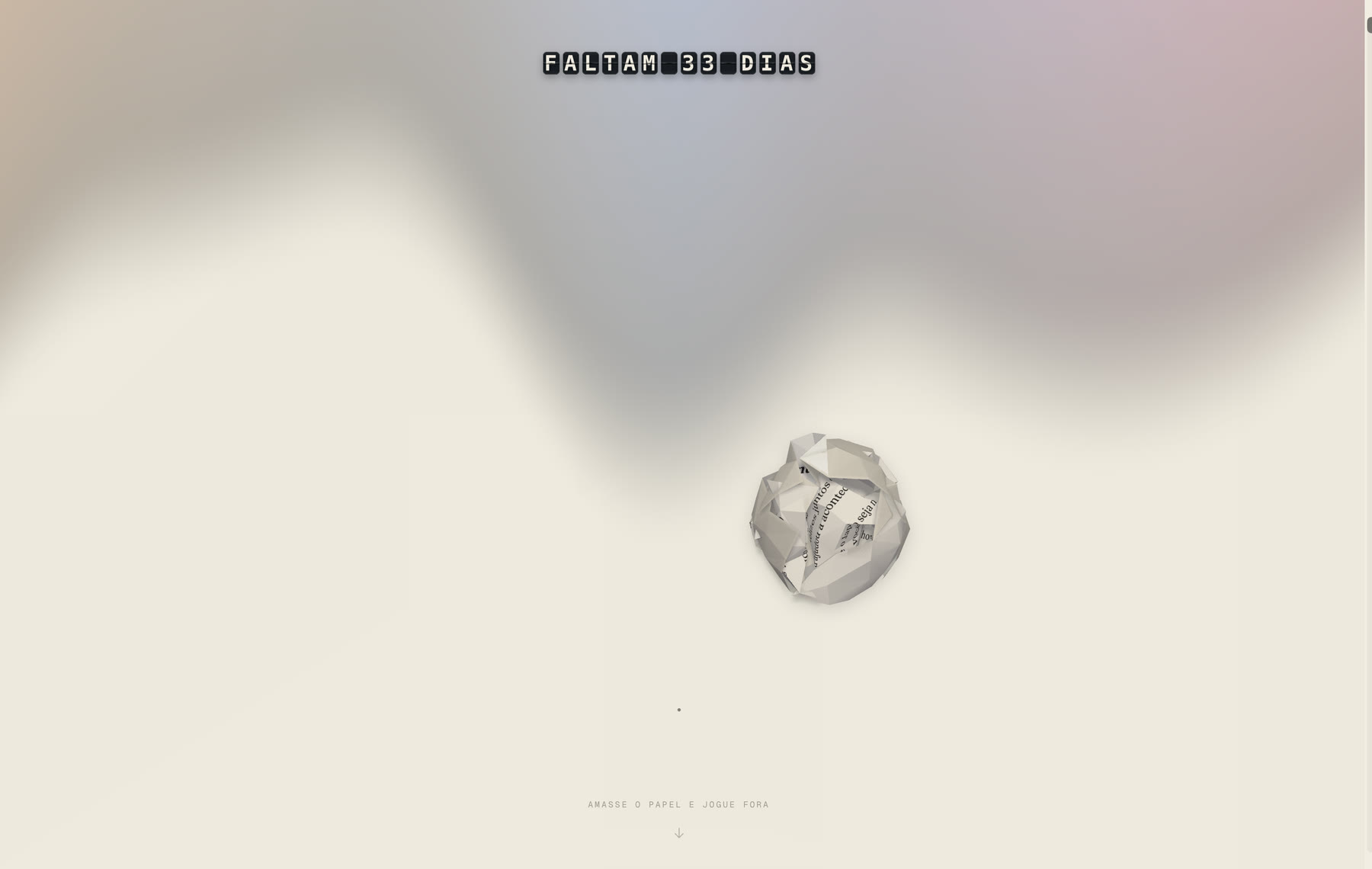
The site opens with a letter written to the couple and the day counter above it. The letter does not get in the way: crumple it, throw it out, and the trip begins. A gift that forces you to read before using it becomes an obstacle. 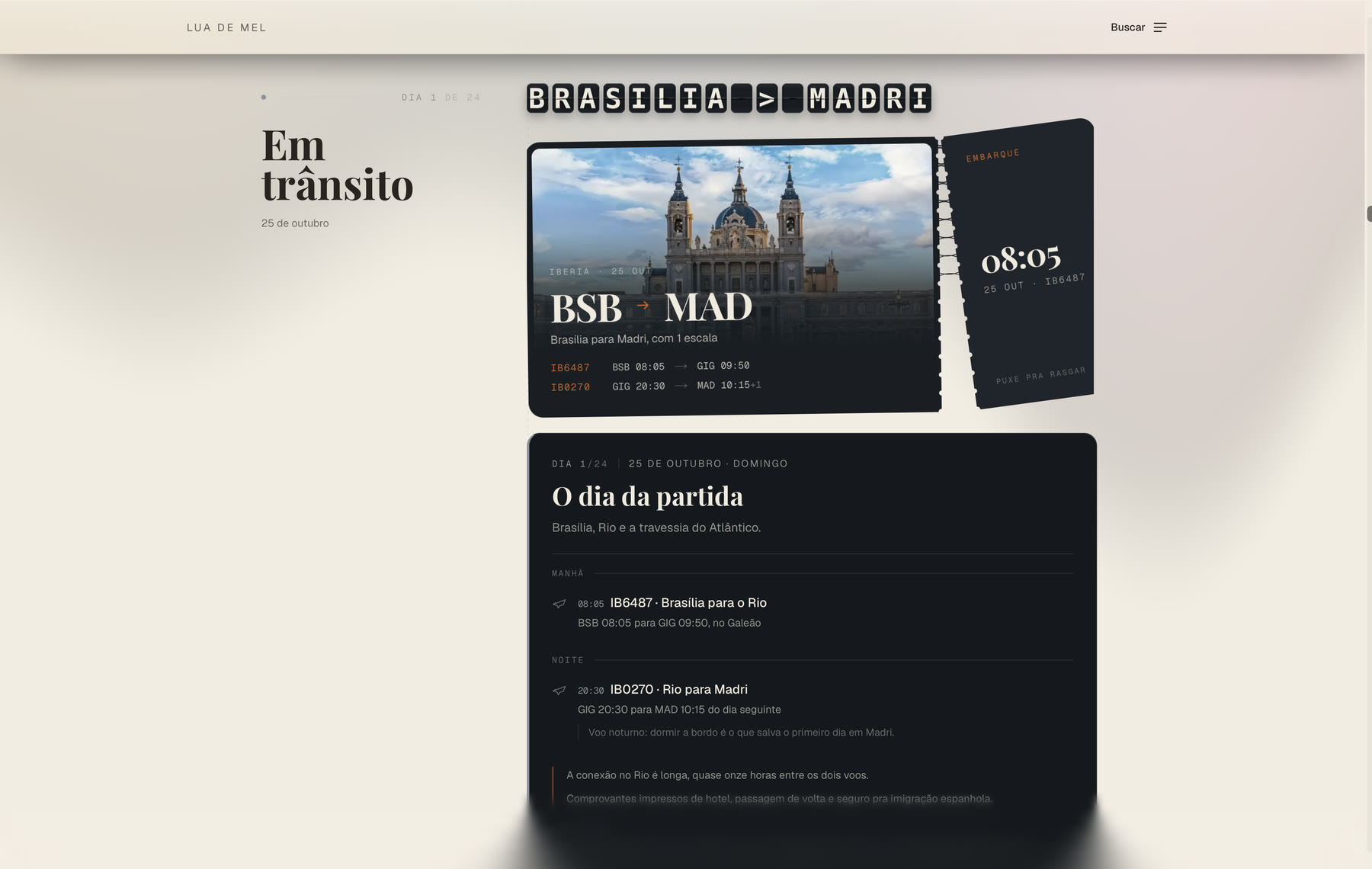
Each flight becomes a real boarding pass, with the number, the time and the stopover taken from the itinerary. The stub tears when you pull it. A flying day stops being a line of text and becomes the thing it actually is. 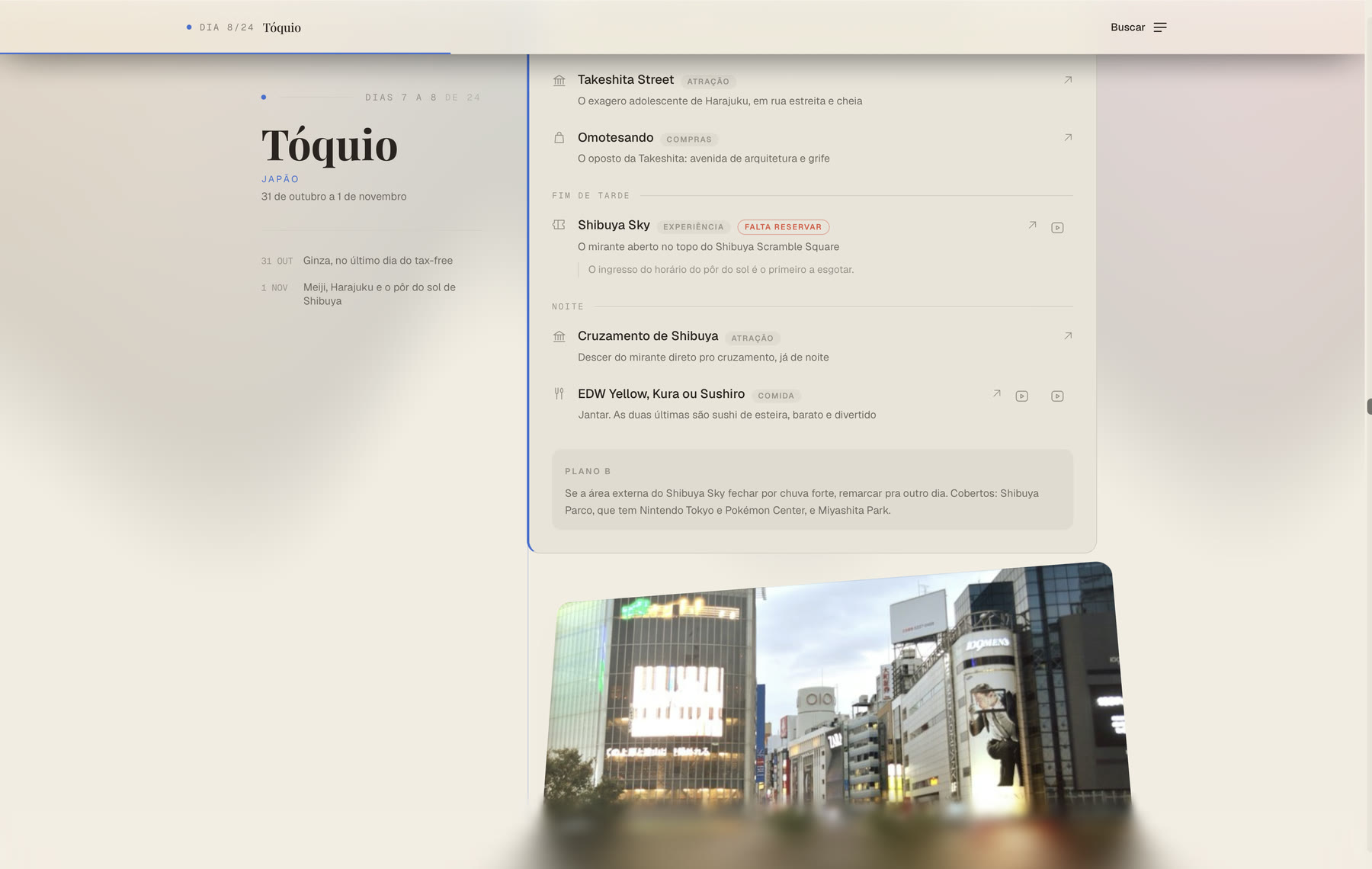
A whole Japanese day on screen, split into morning, afternoon and night, because at three in the afternoon what matters is what is still ahead. The red tag marks only what is still to be booked, and plan B is already written underneath, ready for the day it rains. 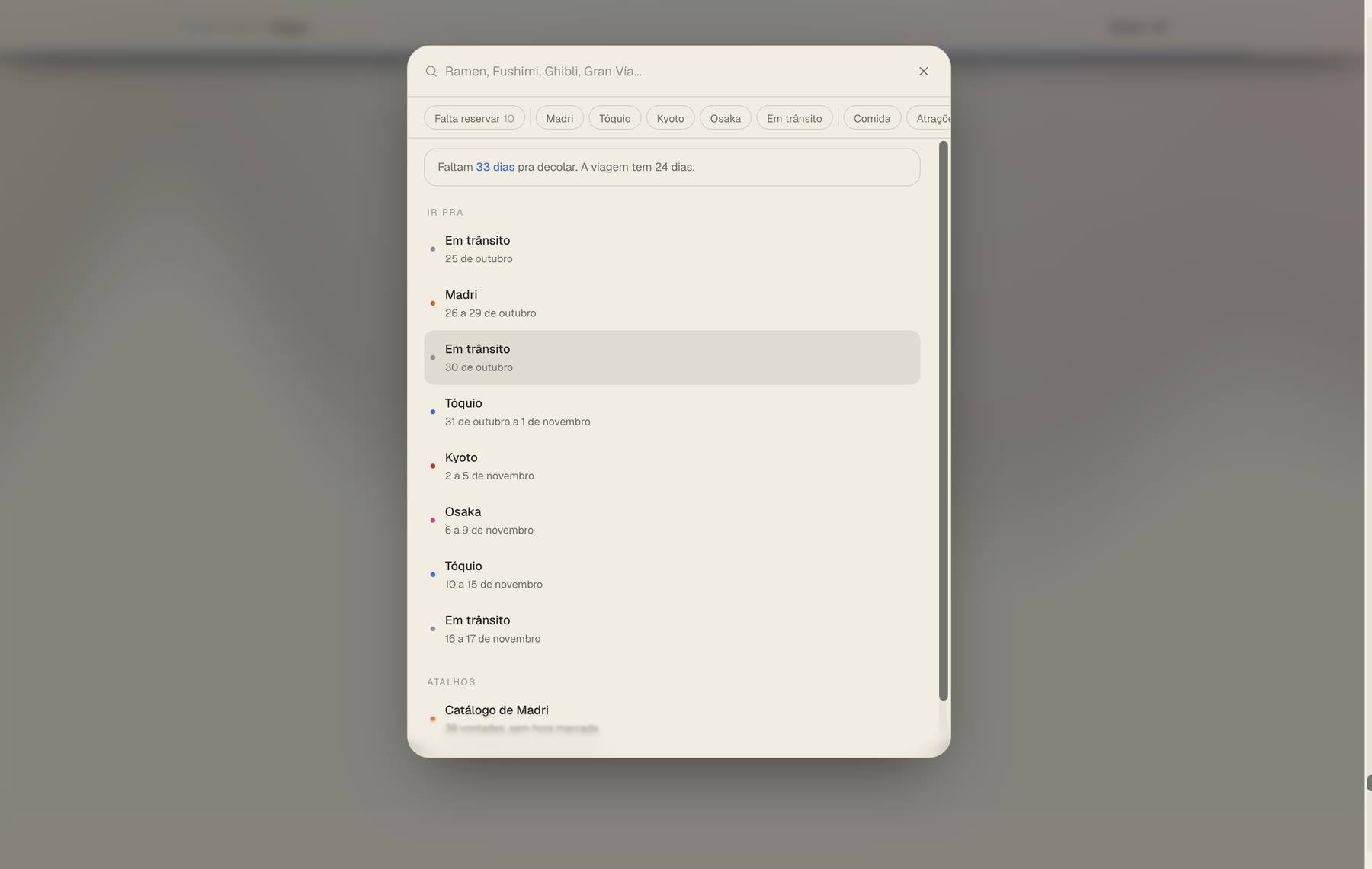
Search opens from anywhere on the site and finds a place, a city or a day by name. It only exists because the site will be used during the trip: when the question is "was Ghibli today?", nobody wants to scroll 24 days to find out.