Cintila
A costume-jewellery store built for a seller who closes sales on WhatsApp: a pretty shop window, bag, coupon and a simple admin, with the order wrapping up in the chat.
Cintila is a FICTITIOUS store, built for this portfolio: name, prices and company details are examples. The product photos come from Unsplash, free to use, and the order WhatsApp is a test number.
- 13 pieces in 4 categories, with real photos, switchable colours, favourites and search
- A bag with free shipping above a threshold, a first-purchase coupon and the order sent to WhatsApp
- An admin to register pieces, prices and stock, and policy pages already in the footer
- Astro, GSAP and Lenis, no UI framework: static, light pages
How it worked before.
People who sell costume jewellery on a small scale usually start on Instagram and WhatsApp. It works, but every order turns into a long chat: which piece, what colour, how much, whether it is in stock. The seller repeats the same explanation all day.
A ready-made platform would solve it, but it charges a subscription, takes a commission and delivers a store like everyone else’s. Jewellery sells through delicacy, and that gets lost in a generic template.
What changed.
Cintila is a storefront of its own that ends where the seller already works. The person picks a piece, switches the colour, gathers everything in the bag and the order leaves already assembled for WhatsApp, with name, pieces, colours and total. Shipping is agreed in the chat, which is how she already does it.
The look has the calm that jewellery asks for: thin typography, ivory and gold tones, big photos and cards that show a second photo on hover. On the phone the categories appear right at the start, the buy bar of a piece does not cover the content and the bag opens over the screen.
To sell more without complication there is a first-purchase coupon, a free-shipping bar that advances as the bag fills, favourites and instant search. A simple admin lets the owner register pieces, prices and stock without touching code.
The store is fully static, so it opens fast even on a bad network. The company details and the exchange, shipping and privacy policies are already in the footer as examples, because the law asks that of anyone selling online.
A look inside.
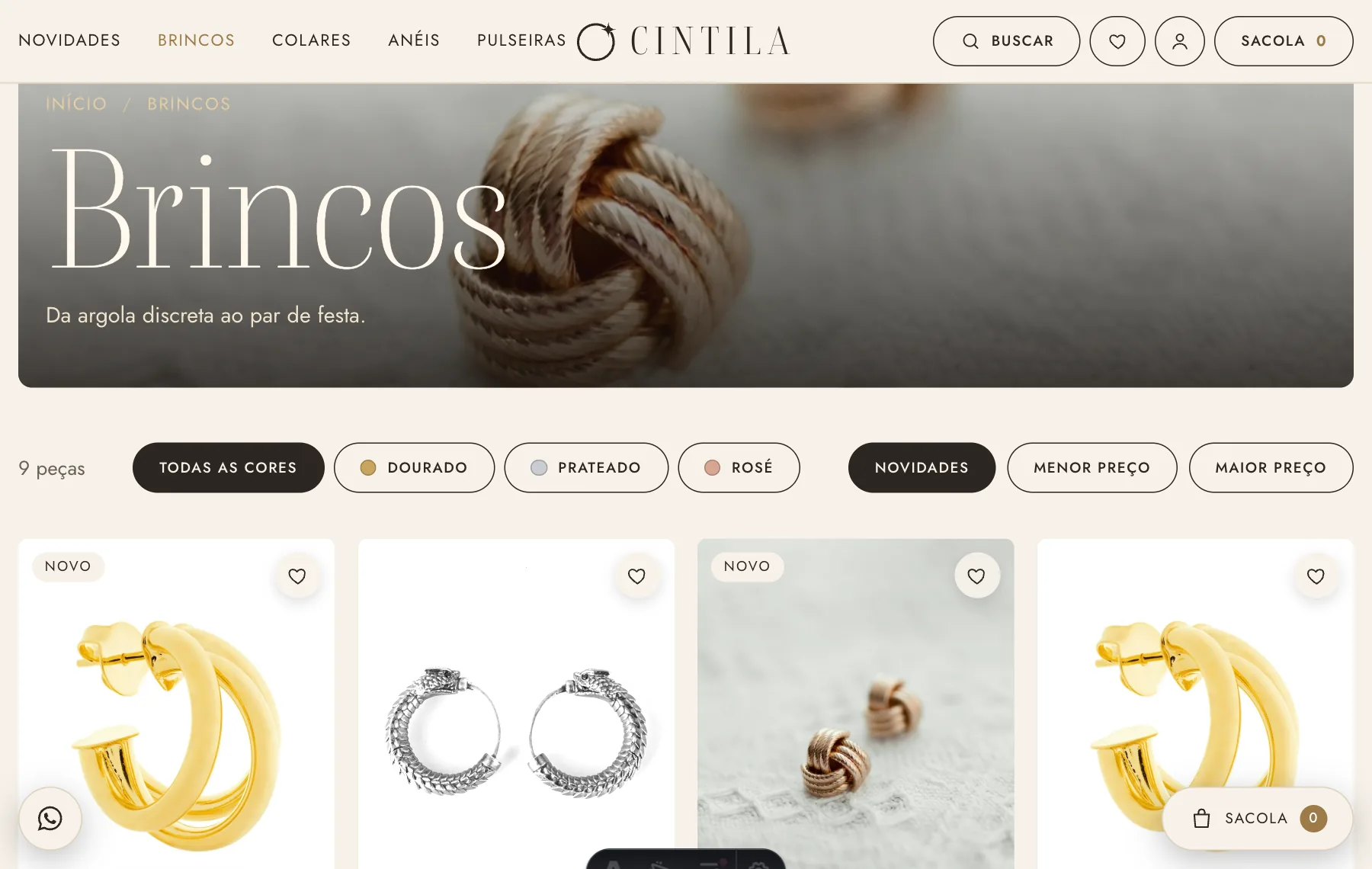
Each category has its own banner, a colour filter and sorting by newness or price. The card’s second photo appears on hover. 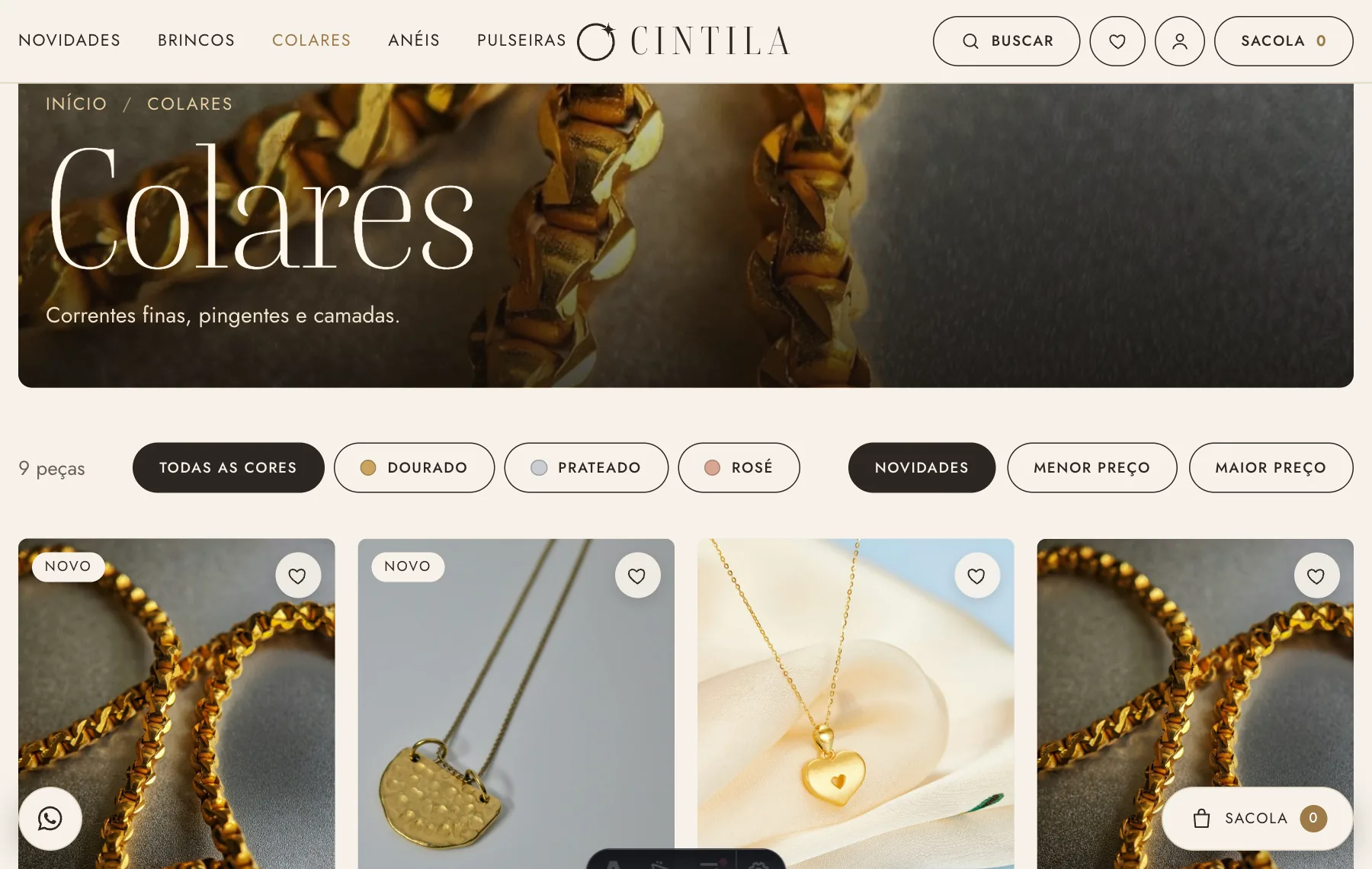
The grid keeps price and button on the same line, even when a piece’s name takes two lines. 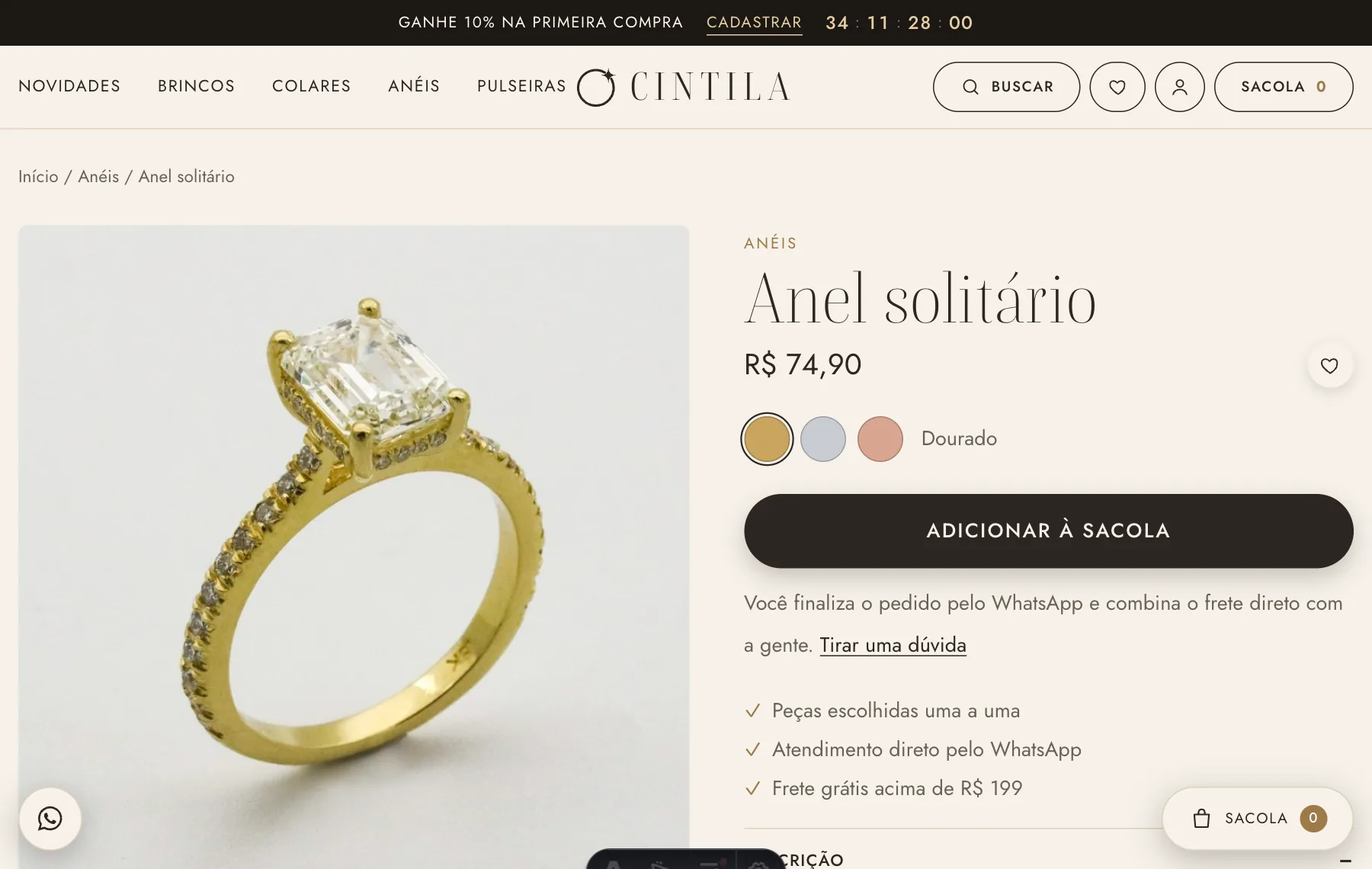
The piece page switches colour without reloading, explains that the order is closed on WhatsApp and keeps a question one click away. 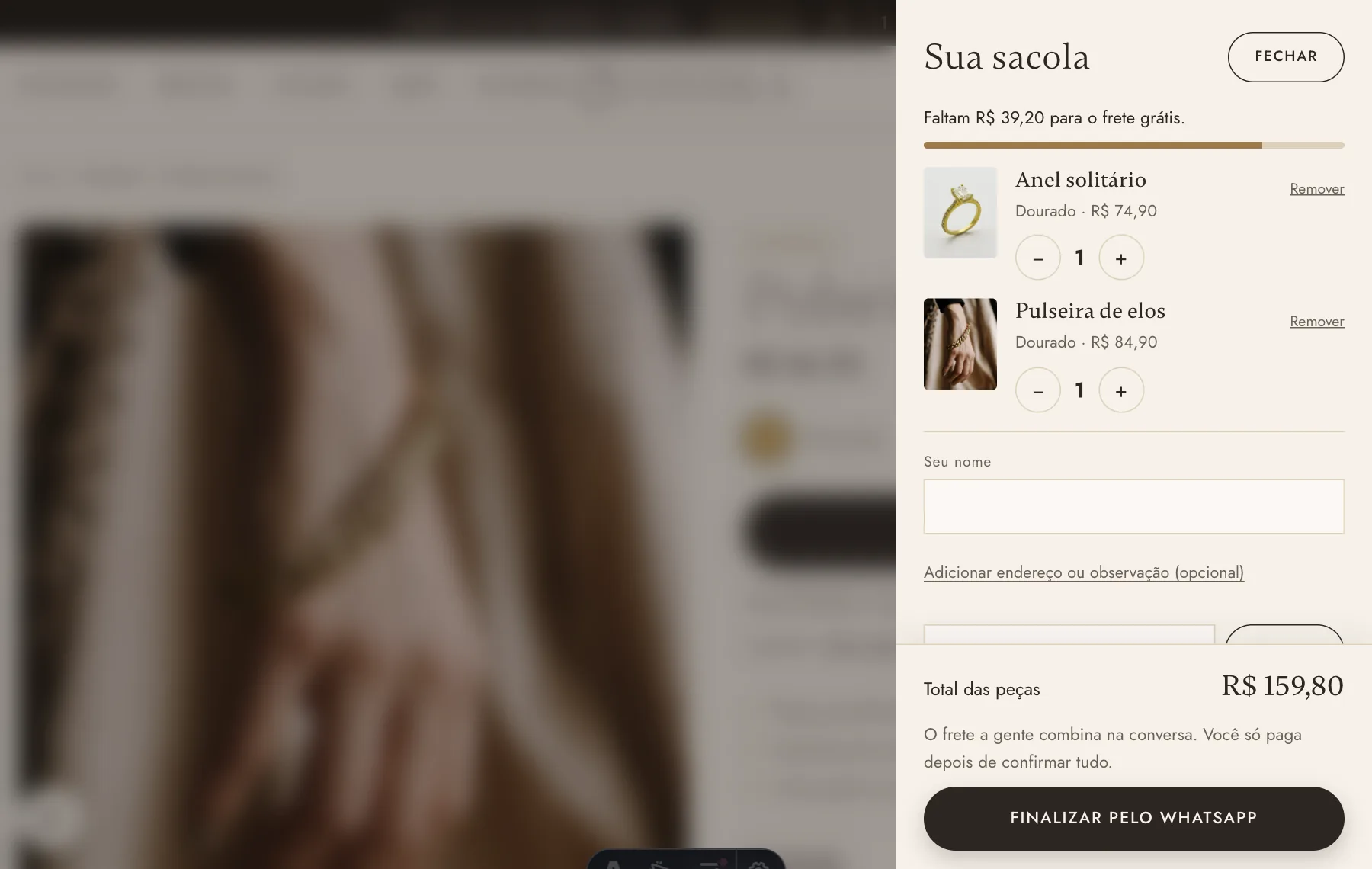
The bag shows how much is missing for free shipping and checks out by building the order message on WhatsApp. 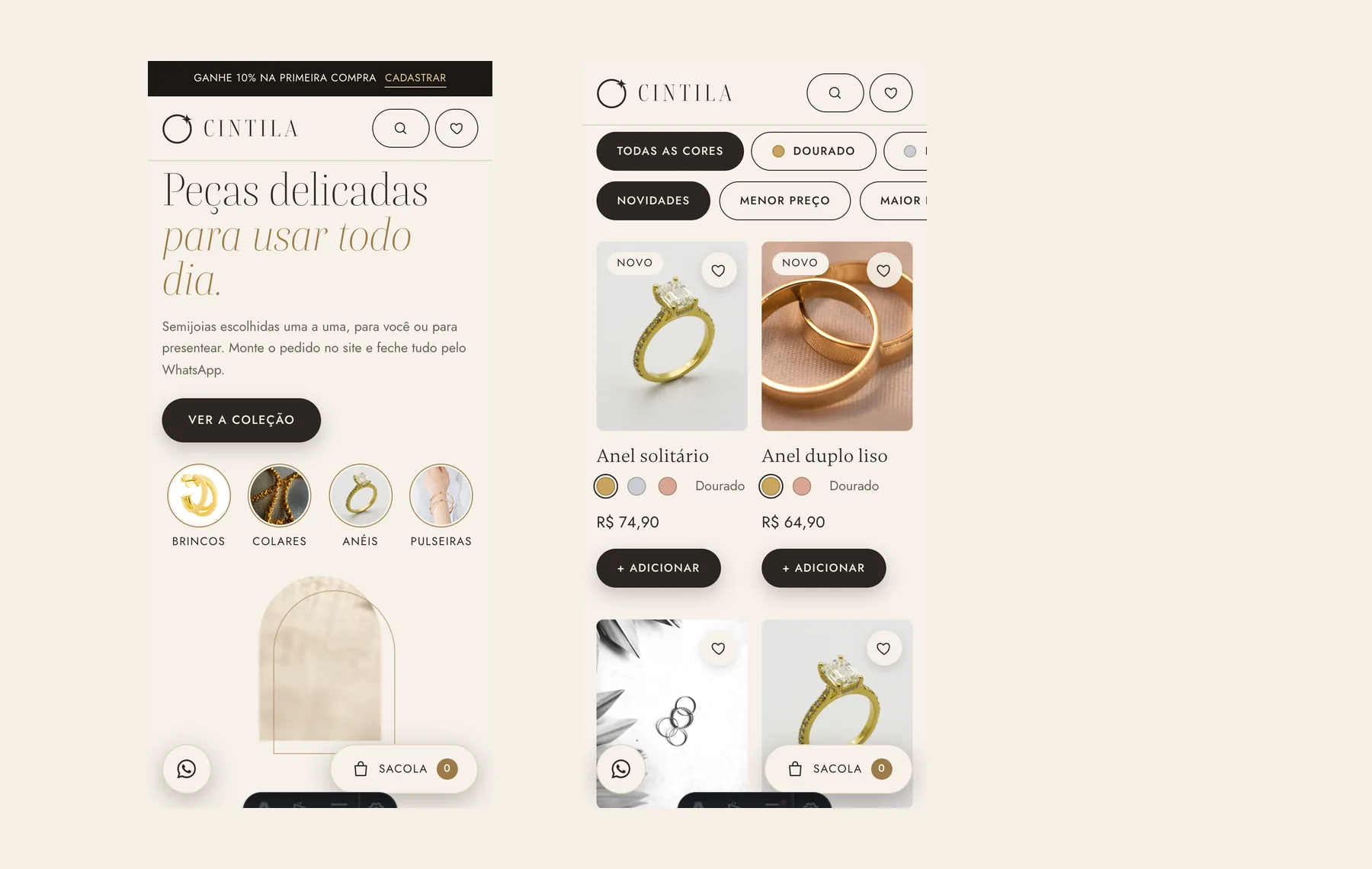
On the phone the categories come right at the start and the pieces sit in two columns, with the bag always within reach of the thumb.